
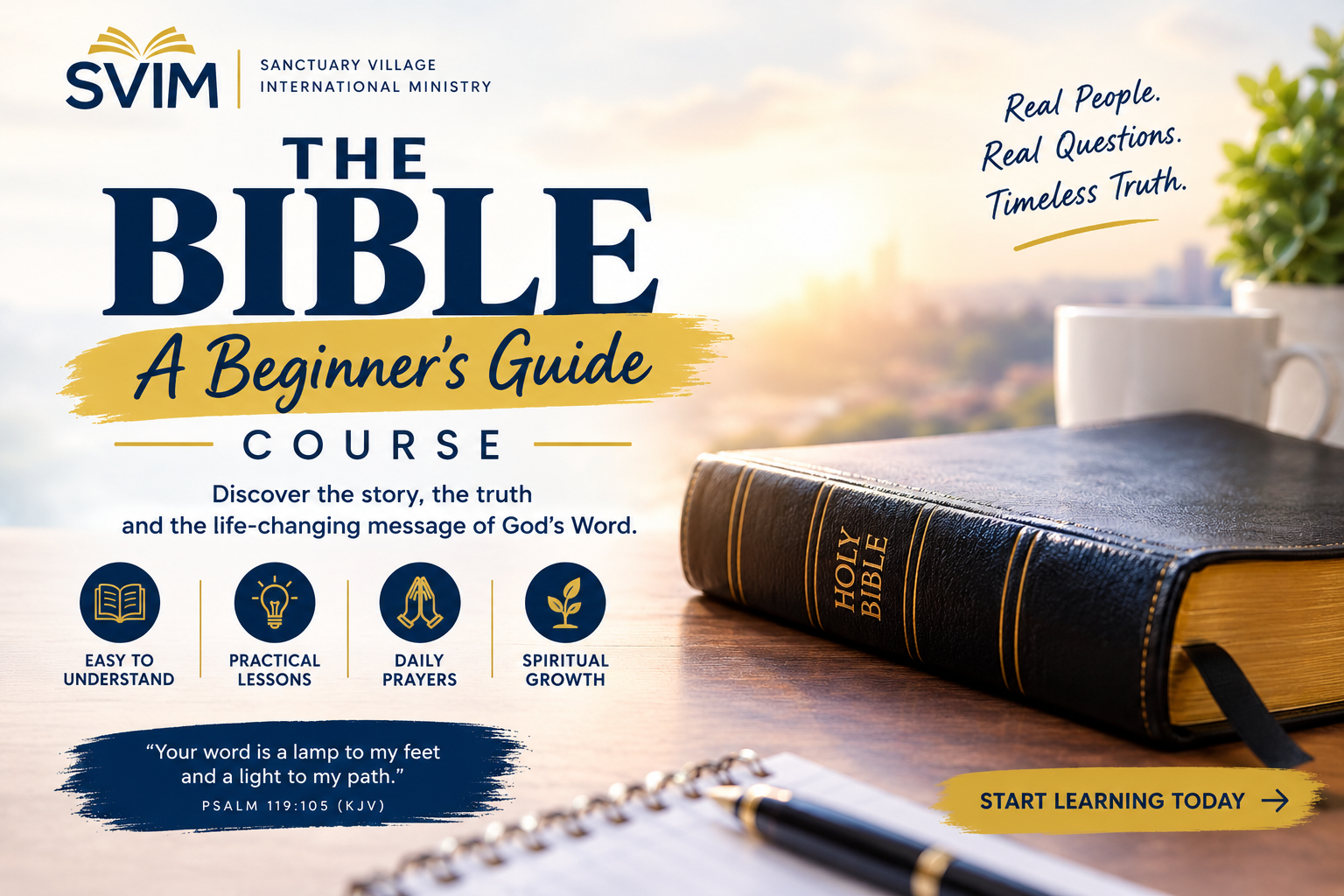
The Bible: A Beginner’s Guide
By Annet Birungi Petch
Categories: Bible Foundations
Share
Share Course
Page Link
Share On Social Media
About Course
Discover what the Bible is, why it was written, and how it reveals God’s purpose for humanity. This beginner-friendly course introduces you to the foundation of God’s Word and helps you begin your journey of understanding Scripture.
What Will You Learn?
- ## Overview
- The Bible, A Beginner’s Guide is a foundational Bible study course designed to help learners understand the Scriptures, discover God's revelation through His Word, and develop a stronger foundation for studying the Bible accurately.
- Through structured topics, Scripture-based lessons, practical examples, and quizzes, students will explore essential biblical truths and learn the importance of understanding Bible passages in their proper context.
- This course encourages learners to examine what the Scriptures teach rather than relying solely on human opinions, religious traditions, or personal experiences. It aims to help students grow in their understanding of God's Word and the message revealed through Jesus Christ.
- The course is offered freely through Sanctuary Village International Ministry (SVIM), welcoming learners who desire to study the Bible and grow in their understanding of Scripture.
- ## What Will I Learn?
- By the end of this course, students should be able to:
- * Understand the purpose and importance of studying the Bible.
- * Develop a foundation for reading and understanding Scripture.
- * Recognize the importance of biblical context when interpreting passages.
- * Understand that different passages address different audiences, circumstances, and covenant settings.
- * Explore God's revelation, character, and purposes through His Word.
- * Identify the difference between what Scripture teaches and what people may claim it teaches.
- * Develop the habit of examining Bible teachings carefully.
- * Understand foundational biblical truths concerning Jesus Christ and His finished work.
- * Apply biblical teaching thoughtfully to everyday life.
- * Grow in confidence when reading, studying, and discussing the Scriptures.
- ## Target Audience
- This course is suitable for:
- * Beginners who want to understand the Bible.
- * Christians who want to strengthen their biblical foundation.
- * New believers seeking to grow in their understanding of God's Word.
- * Individuals who want to learn how to study Scripture in context.
- * Bible study groups and Christian fellowship communities.
- * Anyone who desires to examine biblical teachings carefully and grow in knowledge of the Scriptures.
- No advanced biblical knowledge is required.
- ## Total Course Duration
- **12 weeks (approximately 3 months).**
- The recommended study commitment is approximately 3–5 hours per week.
- The course is self-paced, allowing students to study according to their personal schedules. Students may need additional time to review the Scriptures, reflect on the lessons, and complete the assessments.
- ## Materials Included
- * Structured Bible study topics and lessons.
- * Scripture quotations from the King James Version (KJV).
- * Explanations of foundational biblical truths.
- * Practical examples to support understanding.
- * Key takeaways for lesson review.
- * Topic quizzes to assess understanding.
- * A final review and assessment, when available.
- ## Requirements/Instructions
- * A willingness to learn and understand the Bible.
- * A Bible, preferably the King James Version (KJV), for following the Scripture quotations and studying passages in their wider context.
- * An internet connection to access the online course.
- * A willingness to read the lessons carefully and complete the quizzes.
- * An open and teachable attitude when examining Scripture.
- * A commitment to study Bible passages in context rather than relying on isolated verses.
- **Instructions for students:**
- Proceed through the topics and lessons in order. Read the Scripture passages carefully, consider the explanations and practical examples, and complete the quizzes after studying the relevant material.
- Take your time to understand what you are learning. The purpose is not merely to finish the course quickly, but to develop a stronger foundation for understanding God's Word.
Course Content
Theme: The Significance and Purpose of the Bible: Understanding Its Role in Faith and Life
Welcome to Your Journey of Understanding God's Word
Welcome, and thank you for joining us on this journey of discovering the Bible.
Whether you have been a Christian for many years, have recently come to faith in Jesus Christ, or are simply curious about what the Bible teaches, you are welcome here.
Our purpose is not merely to help you read the Bible. We want to help you understand what you are reading, why it was written, how its message unfolds, and how to distinguish what Scripture actually teaches from what people may have told you it teaches.
My friend, let me begin with a question.
Have you ever stopped to ask yourself why you believe what you believe about the Bible?
Perhaps you grew up in a Christian family. Perhaps someone gave you a Bible and told you that it is the Word of God. Perhaps you have heard sermons, memorized verses, or attended church for many years.
But have you ever taken time to understand what the Bible is, how it came to us, and why we should take its message seriously?
Do not be afraid to ask these questions. A sincere desire to understand is not an enemy of faith. It can be the beginning of deeper understanding.
In Acts 17:11, the Bereans are commended because they received the message eagerly and searched the Scriptures daily to examine what they were hearing.
Notice that they did not simply accept a message because someone was preaching it. They examined the Scriptures.
If the Bereans searched the Scriptures while listening to the apostle Paul, should we not also be willing to examine what we hear today?
As we begin, I encourage you to keep your Bible open. Do not simply accept my words because I am the one teaching. Follow the Scriptures, examine the passages, and allow the text to be understood in its proper context.
Let us begin.
Topic 1: Why Is the Bible?
Discover what the Bible is, why it was written, how it came to us, and why understanding its message requires more than simply reading individual verses. This lesson introduces the Bible's inspiration, original languages, structure, preservation, and authority. You will also learn why biblical context matters and how to distinguish God's instructions from the words and actions of people recorded in Scripture.
Topic 2: How Did We Receive the Bible?
Discover how God used human writers to communicate His Word and how the Scriptures were written, preserved, collected, and translated through history. This topic will help you understand how we received the Bible we read today and why careful study of Scripture matters.
TOPIC 3: WHY TRUST THE BIBLE?
Why should we trust the Bible? In this topic, we will examine what Scripture says about its own inspiration and authority, how Jesus affirmed God's truth, and how the Scriptures have been preserved and transmitted through generations.
We will also explore why the Bible contains the words of many different people, including believers, unbelievers, and those who opposed God. Students will learn that although all Scripture is inspired by God, not every statement recorded in the Bible is a direct command or an expression of God's approval.
Through careful study of the King James Version, we will learn to distinguish between God's instructions, human testimony, recorded conversations, and descriptions of events. We will also examine how the Bible's historical transmission and lasting influence contribute to the reasons Christians trust it.
By the end of this topic, students should have a clearer understanding of why Christians regard the Bible as God's inspired Word and why it must be studied carefully, in context, and with a willingness to learn.
Topic 4: The Bible — God’s Word Written Through Human Authors
The Bible is God's Word communicated through human authors. God worked through people with different backgrounds, experiences, writing styles, and purposes to communicate His truth. In this topic, we will examine how divine inspiration and human authorship work together, why the Bible contains different voices, and why understanding who is speaking is important when studying Scripture.
Topic 5: Understanding Different Types of Biblical Writing
The Bible contains different types of writing, including history, poetry, wisdom, letters, parables, prophecy, and figurative language. Understanding these forms helps us interpret Scripture correctly, recognise the purpose of each passage, and avoid misunderstanding God's Word. In this topic, we will learn how to recognise different forms of biblical writing and understand how to study them in context.
Topic 6: Understanding, Believing, and Applying God’s Word
In this topic, students will learn how to respond to the truths they discover in the Bible. They will explore the difference between understanding God's Word, believing what it teaches, and applying biblical truth to everyday life. Students will also learn how to distinguish biblical principles from personal opinions, recognise the importance of context, and avoid applying Scripture in ways that change its meaning. This topic will help beginners grow in their understanding of God's Word and learn how to respond to it responsibly.
Topic 7: Understanding, Believing, and Applying God’s Word
The Bible is not meant to be read only for knowledge; it is meant to be understood, believed, and applied in our daily lives. In this topic, we will learn how to understand Scripture according to its context, recognise the main message of a passage, believe what God has revealed through His Word, and put biblical truth into practice.
We will also explore the importance of reading Scripture carefully, avoiding misunderstandings, allowing God's Word to shape our thinking, and learning to live according to the truth we discover in the Bible.
Through practical examples and the King James Version (KJV) of the Bible, this topic will help beginners develop a stronger foundation for understanding Scripture and living out its teachings responsibly.
Key Scripture (KJV):
James 1:22
“But be ye doers of the word, and not hearers only, deceiving your own selves.”
Topic 8: The Revelation of God to People
Topic Description
How can we know God, and how has He made Himself known to humanity?
God has not left humanity without a witness of His existence and power. He reveals Himself through creation, through His written Word, and most clearly through Jesus Christ. Through the Holy Spirit, believers are helped to understand spiritual truth and grow in their knowledge of God.
In this topic, we will explore how God reveals Himself through creation, why we must worship the Creator rather than created things, how Jesus Christ reveals the Father, and how the Holy Spirit helps believers understand the truth of God's Word. We will also learn the importance of handling Scripture carefully, distinguishing God's revealed truth from human assumptions, and understanding the message of salvation through Jesus Christ.
By the end of this topic, you should understand the different ways God has made Himself known, why Jesus Christ is central to God's revelation, and why the Scriptures are essential for growing in the knowledge of God.
Key Scripture: Hebrews 1:1–2 (KJV)
Hebrews 1:1: “God, who at sundry times and in divers manners spake in time past unto the fathers by the prophets,”
Hebrews 1:2: “Hath in these last days spoken unto us by his Son, whom he hath appointed heir of all things, by whom also he made the worlds;”
Topic 9: Understanding the Words and Experiences of People in the Bible
Topic Description
The Bible contains the words, prayers, experiences, and conversations of many different people. However, not everything a person says in the Bible is necessarily a statement of God's truth. To understand Scripture correctly, we must identify who is speaking, whom they are addressing, the circumstances surrounding their words, and how the passage fits within the wider message of the Bible.
In this topic, we will examine the experiences of Job, the words of Job's friends, the prayers of David, and other biblical passages to learn why context matters. We will also explore the difference between God's words, human opinions, prayers, historical accounts, promises, commands, and prophecies.
Through these lessons, students will develop the ability to read Scripture carefully, avoid drawing conclusions from isolated verses, and distinguish between what the Bible records and what it teaches as truth.
Key Scripture — 2 Timothy 2:15 (KJV)
“Study to shew thyself approved unto God, a workman that needeth not to be ashamed, rightly dividing the word of truth.”
Topic 10: Knowing God Through His Word
Topic Description
The Bible does more than provide information, history, instructions, and accounts of people’s experiences. Through the Scriptures, we learn about God’s character, His purposes, His dealings with humanity, and His plan of salvation through Jesus Christ.
In this topic, we will explore what the Bible reveals about God and how understanding His Word helps us grow in our knowledge of Him. We will learn to distinguish between knowing information about God and growing in our understanding of who He is, while allowing the truth of Scripture to shape our faith and daily lives.
Our focus will remain on the message of the Bible, with Jesus Christ at the centre of God's revealed plan.
### Key Scripture — John 17:3 (KJV)
“And this is life eternal, that they might know thee the only true God, and Jesus Christ, whom thou hast sent.”
### Learning Objectives
By the end of this topic, students should be able to:
1. Explain what the Bible reveals about God's character.
2. Recognize God's faithfulness through the Scriptures.
3. Understand how God's holiness, love, mercy, and righteousness are revealed.
4. Understand why Jesus Christ is central to knowing God.
5. Recognize the importance of understanding God's words and actions in context.
6. Distinguish between knowing facts about God and growing in the knowledge of Him.
7. Understand how God's grace reveals His purpose in salvation.
8. Recognize the importance of trusting God's revealed Word.
9. Explain how knowing God influences a believer's thinking and conduct.
10. Describe how continued study of Scripture helps believers grow in their knowledge of God.
Opening Prayer
Heavenly Father, in the name of Jesus Christ, I thank You for bringing me through the previous topics and helping me grow in my understanding of Your Word. Thank You for the opportunity to learn, and for the wisdom and understanding You have given me throughout this course.
Father, as I begin this final topic, *Knowing God Through His Word*, I ask You to help me grow in my understanding of who You are. Teach me to recognize Your character, Your faithfulness, Your holiness, Your love, Your mercy, and Your grace through what You have revealed in the Scriptures.
Lord, help me not to depend on my own assumptions, feelings, or opinions about You. Teach me to understand Your Word carefully, to read every passage in its proper context, and to recognize the truth You have revealed. Give me a humble heart that is willing to learn, a mind that seeks understanding, and the wisdom to distinguish Your truth from human ideas.
Father, help me to know You through Jesus Christ, whom You have sent. As I study these lessons, deepen my understanding of the finished work of Christ and the salvation You have provided through Him. Help me appreciate Your grace and understand how knowing You should shape my faith, thinking, and daily conduct.
Holy Spirit, guide me as I study. Help me to understand the Scriptures, recognize the truth, and grow in wisdom. May I become a faithful student of Your Word, able to share what I learn with others in truth, love, humility, and grace.
Thank You, Father, for Your Word and for the opportunity to continue learning. As I complete this course, help me build a stronger foundation in the Scriptures and develop a lasting desire to know You more through what You have revealed.
I commit this study into Your hands, trusting You to guide me in understanding Your Word faithfully.
In the name of Jesus Christ, I pray.
Amen.
Student Ratings & Reviews

No Review Yet